
⏱️ In a rush? We get it. If you just want the quick, mum-friendly guide on how to stop scratchy clothes and protect your baby’s skin in 2 minutes, Why Your Baby's Softest Organic Clothes Turn Rough.
Summary
For decades, pediatric dermatology has emphasized the vulnerability of the newborn skin barrier, specifically the critical role of the mildly acidic "acid mantle" (pH 4.5–5.5) in defending against environmental pathogens and maintaining hydration. However, traditional laundry care has largely ignored a profound physical-chemical reality: the textiles wrapping a newborn 24/7 are an extension of the skin itself.
Standard commercial laundry detergents are highly alkaline ($pH$ 9.5–11.5), utilizing aggressive industrial surfactants and protein-digesting enzymes. This formulation strategy is structurally destructive to high-value biological polymers—such as organic cotton, superfine merino wool, and regenerated bamboo cellulose—frequently chosen by parents for premium infant wear.
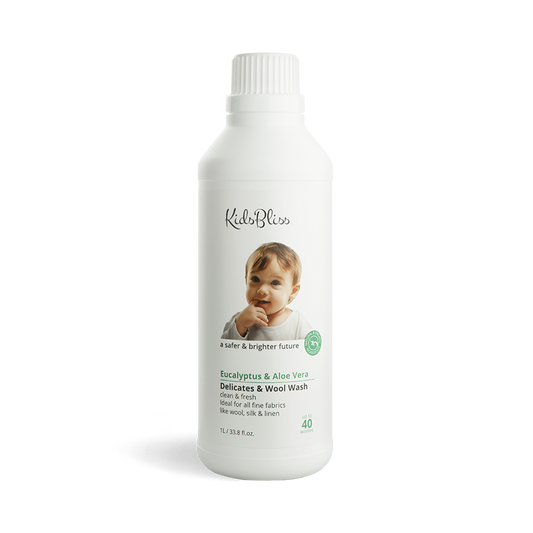
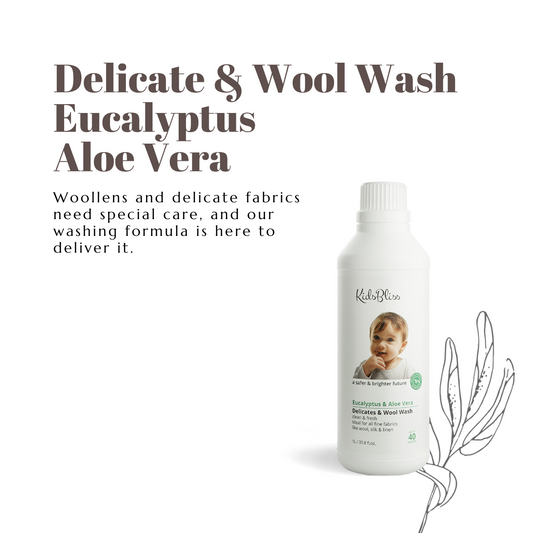
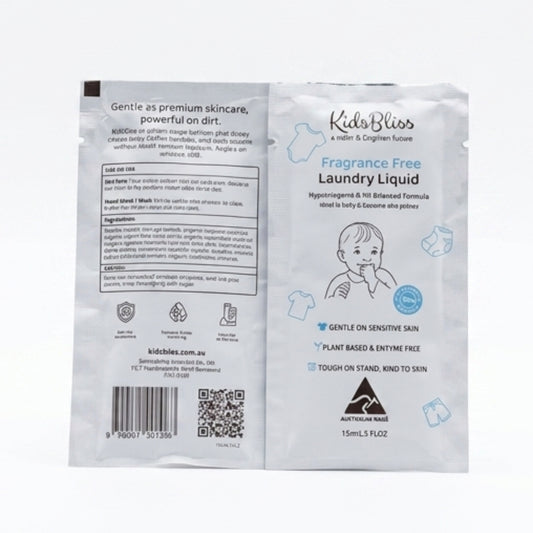
This report presents the scientific rationale for KidsBliss Biomimetic Pediatric Fabric Skincare, formulated at a precise target of pH 4.8. By establishing a molecular bridge between pediatric skin physiology and polymer textile science, this synchronized microenvironment protects the neonatal skin barrier while preserving the macromolecular integrity, native softness, and lifespan of luxury biological fibers.
1. Biophysics of the Neonatal Skin Barrier vs. The "Alkaline Detergent Trap"
The Neonatus Stratum Corneum and Acid Mantle Physiology
The outermost layer of neonatal skin, the stratum corneum, functions as a dynamic "brick-and-mortar" physical barrier. The "bricks" are flattened, keratinized cells called corneocytes, while the "mortar" consists of an intercellular lipid lamellar matrix rich in ceramides, free fatty acids, and cholesterol.
Upon birth, an infant's skin undergoes a rapid physiological transition, establishing a slightly acidic surface film known as the acid mantle, with a highly stable target range of pH 4.5 to 5.5.
The acid mantle’s mildly acidic state serves as thermodynamic and enzymatic armor:
-
Enzymatic Regulation: It regulates the activity of lipid-processing enzymes (such as β-glucocerebrosidase) necessary for the synthesis and repair of the lipid barrier, preventing trans-epidermal water loss (TEWL).
-
Microbiome Governance: Maintaining a surface pH below 5.5 creates a hostile environment for opportunistic pathogens like Staphylococcus aureus (a primary driver of atopic dermatitis and eczema), while selectively supporting commensal flora such as Staphylococcus epidermidis.
The "Alkaline Trap" of High-Efficiency Laundering
Commercial laundry liquids and powders are engineered to be highly alkaline. Utilizing alkaline builders like sodium carbonate (soda ash), sodium silicate, and sodium hydroxide, they force the wash bath pH to levels between 9.5 and 11.5 to saponify organic fats and sebum.
In modern high-efficiency (HE) washing machines, which use highly restricted water volumes, these alkaline compounds are exceptionally difficult to rinse away.
⚠️ The Mechanism of Chronic Irritation
A stubborn, alkaline, hydrophobic film of detergent residue and surfactant monomers remains trapped deep within fabric weaves—particularly in folded seams, double-layered zones, and elastic waistbands. When worn, the infant's sweat and body heat reactivate these dry alkaline residues.
This continuous chemical contact neutralizes the acid mantle, inactivates barrier-repair enzymes, denatures skin proteins, and triggers contact dermatitis and acute eczema flare-ups.
| Parameter | Healthy Infant Skin Barrier | Impact of Standard Alkaline Detergents (pH 9.5–11.5) |
| Surface pH | 4.5 - 5.5 (Optimal physiological range) | Elevates skin pH to >8.0 via surfactant residue reactivation. |
| Lipid Matrix | Cohesive lamellar sheets with high ceramide density. | Denatured and solubilized; lipid bilayers are systematically stripped. |
| Microbiome | Dominant S. epidermidis (protective flora). | Promotes colonization and biofilm formation of pathogenic S. aureus. |
| TEWL Rate | Low (highly hydrated, resilient skin). | High; leads to chronic xerosis, micro-fissuring, and severe eczema. |
2. The Molecular Coincidence: Isoelectric Point (pI) of Keratin vs. Skin pH
The structural fibers chosen for premium infant wear—such as superfine Australian merino wool (featured by heritage brands like Smitten Merino, Toorallie, Merino Country, and McIntyre Merino)—are composed of $\alpha$-helical keratin protein chains. Keratin is an amphoteric macromolecule containing both acidic carboxylic side chains (e.g., aspartic acid, glutamic acid) and basic amino side chains (e.g., lysine, arginine, histidine).
The structural integrity of this protein matrix is maintained by covalent disulfide cross-links (-S-S-), intramolecular hydrogen bonds, and electrostatic salt bridges.
The Electrostatics of the Isoelectric Point (pI)
The isoelectric point (pI) is the precise pH coordinate at which a macromolecule carries a net electrical charge of zero. For wool and cashmere keratin, this pI lies between pH 4.8 and 5.2.
At this exact pH level, the positive charges of the basic amino groups are perfectly balanced by the negative charges of the carboxylic acid groups. This neutral electrical state maximizes the electrostatic attraction between oppositely charged side chains, forming stable salt bridges that lock the protein structure in its most resilient, relaxed, and elastic state.
When a keratin fiber is exposed to standard alkaline detergents (pH > 8.5), this electrostatic equilibrium collapses. Hydroxide (OH-) ions deprotonate the neutral carboxylic acid groups (-COOH) into carboxylate anions (-COOC-):
Simultaneously, the basic amino groups lose their positive charges. The sudden abundance of negative charges along the polypeptide chains generates powerful intramolecular electrostatic repulsion. This force drives the protein chains apart, causing the fiber matrix to absorb excess water, swell radially, and undergo structural destabilization.
Cuticle Flaring, Surface Roughness, and Mechanoreceptor Irritation
The surface of a merino wool fiber is covered by overlapping, microscopic cuticle scales coated with a protective hydrophobic lipid layer of 18-methyl eicosanoic acid (18-MEA). Under mildly acidic conditions (pH 4.8–5.5), these scales remain flat, tightly locked, and smooth.
When exposed to alkaline detergent residues (pH > 9.0) and wash-drum mechanical shear, the radial swelling of the cortex forces the outer cuticle scales to flare outward. During mechanical tumbling, these flared scales act as unidirectional microscopic ratchets, catching and interlocking with adjacent fibers. This results in permanent, irreversible felting shrinkage and fiber stiffness.
At pH 4.8 (Isoelectric Point): KidsBliss Environment
=========================  <- Cuticle scales flat, locked, and smooth.
=========================  <- Low friction coefficient (Ra = 0.38 um)

At pH 9.2 (Alkaline Detergent Residue): Standard Wash
 / \   / \   / \   / \   / \  <- Cuticle scales flare outward.
/   \_/   \_/   \_/   \_/   \ <- High friction (Ra = 0.59 um), causing skin itch.
The physical impact of this chemical shift is severe. AATCC Test Method 144 (Fiber Surface Roughness Index) confirms that superfine merino wool exhibits a baseline mean surface roughness (Ra) of 0.38 μm. After a single wash in an alkaline medium (pH 9.2), Ra increases by 55% to 0.59 μm.
When worn by an infant, these flared, rigid scales rub against the skin, directly triggering C-fiber mechanoreceptors and releasing histamines. This "prickle" effect is a chemistry problem, not a wool problem. KidsBliss pH 4.8 fabric skincare prevents this degradation by keeping the wash and rinse microenvironment synchronized with the keratin isoelectric point, keeping cuticles flat, smooth, and completely itch-free.
3. Physical Chemistry of Cellulose: Swelling, "Alkaline Peeling," and Depectinization
For plant-based infant textiles—such as organic cotton (used by Snuggle Hunny, Purebaby, Grown, and Burrow & Be) and bamboo viscose/lyocell (used by Cuddly Bubs, Nella Vosk, and Butta Baby)—the physical-chemical degradation pathways of alkaline washing are equally destructive.
The Thermodynamics of Cellulose Swelling
Cellulose is a linear homopolymer of β-D-glucopyranose units linked covalently by β-1,4-glycosidic bonds. In water, cellulose naturally absorbs moisture via hydrogen bonding. Water acts as a plasticizer within the amorphous regions of the fiber, disrupting the internal hydrogen bonding network and driving radial swelling.
This swelling behavior is highly temperature-dependent and serves as a major driver of mechanical wear:
-
At 25°C: Regenerated bamboo cellulose swells by approximately 12% in diameter.
-
At 40°C: Radial swelling escalates to 22%, loosening the microfibrillar matrix.
-
At 60°C: Swelling exceeds 30%, leaving the fiber structurally weakened and highly susceptible to mechanical shear and fiber-on-fiber abrasion during the wash cycle.
Under high radial swelling, mechanical agitation easily ruptures surface fibrils, creating extensive surface fuzzing, lint shedding, and pilling. Bamboo viscose jersey washed at 40°C exhibits 3.2 times more pilling than identical fabric washed at 25°C.
The Kinetics of "Alkaline Peeling" in Regenerated Bamboo
While premium bamboo clothing is celebrated for its buttery softness, over 95% of these textiles are composed of regenerated cellulose (bamboo viscose). The xanthation manufacturing process yields highly amorphous, low-crystallinity fibers with high moisture regain (13% to 15%) but exceptionally poor wet strength.
Bamboo viscose retains only 40% to 50% of its dry tensile strength when wet, exhibiting a wet tenacity of just 18–22 cN/tex (compared to cotton’s wet tenacity of 40–45 cN/tex). This wet vulnerability makes bamboo viscose highly sensitive to alkaline hydrolysis, specifically the chemical reaction known as "alkaline peeling".
The safe chemical threshold for regenerated cellulose is pH 8.2. Most commercial baby detergents operate at a pH of 9.5 to 10.5. At pH 10.0, alkaline hydrolysis depolymerizes and cleaves glucose units from the reducing ends of the cellulose chain 8.4 times faster than at a neutral pH of 7.0.
This chemical attack results in severe fabric thinning, heavy lint shedding, and a 31% loss of tensile strength after only five alkaline washes, compared to a mere 6% loss when washed in a neutral or slightly acidic medium.
Furthermore, bamboo naturally carries a surface Lewis acid component that is twice as high as that of standard cotton linter. This unique acid density, combined with bamboo's lower flexural rigidity, gives bamboo textiles their soft drape and fluid, water-like feel on the skin. Alkaline detergents neutralize this native Lewis acid balance, stripping the fiber of its unique drape and turning it stiff and rough.
Organic Cotton and Depectinization
In organic cotton, the outer primary cell wall is shielded by a thin layer of natural pectic substances. While accounting for only 1% of the fiber's total weight, this pectic shield represents approximately 85% of the total acidic groups in mature cotton fibers.
This highly acidic pectic barrier acts as a natural buffer, shielding the underlying crystalline cellulose core from chemical and physical wear.
Standard alkaline laundry detergents strip this protective pectic layer through a process called depectinization. Once this acidic buffer is removed, the cellulose core is exposed to direct alkaline attack and accelerated radial swelling, leading to fiber thinning, structural pilling, and rapid color fading. By formulating KidsBliss at a stable, slightly acidic $pH$ of 4.8, you preserve this natural pectic barrier, keeping organic cotton exceptionally soft, strong, and highly durable.
4. The Pediatric "Non-Bio" (Zero-Enzyme) Safety Mandate
A major misconception in modern pediatric laundry care is the reliance on "biological" (enzyme-based) detergents to resolve infant organic stains, such as milk, spit-up, and diaper blowouts.
Enzymatic Cleanser (Protease): Standard Baby Brands
   + -> [Active Protease Residue]
   Active Protease -> Cleaves Peptide Bonds of Newborn Skin -> Eczema / Chemical Burns

KidsBliss Non-Bio Cleanser: Advanced Science Lab Approach
   -> Emulsify & Lift Stains -> Clean Fabric, Zero Skin Digestion
The Biophysics of Enzyme Reactivation on Skin
Biological detergents rely heavily on industrial enzymes, particularly proteases (which digest protein stains like blood, sweat, and milk) and cellulases (which shave surface fibers to reduce pilling). Proteases function by binding to peptide bonds and hydrolyzing them into smaller, water-soluble fragments.
However, because these enzymes are structurally stable, they do not wash away easily. Due to the low water volumes in HE washers, high concentrations of active protease enzymes remain trapped as dry residues within the baby's clothing.
When the garment is worn, the infant's body sweat, warmth, and wet diapers reactivate the dry enzymes. Because human skin is composed of proteins (collagen, keratin, and elastin), the reactivated proteases immediately begin digesting the baby’s delicate skin barrier. This process triggers "enzyme burns," microscopic cellular micro-fissures, and severe, painful eczema flare-ups.
Macromolecular Fiber Digestion
This enzymatic digestion also attacks the textiles themselves:
-
Protein Destruction (Wool/Cashmere): Because wool and cashmere are protein fibers made of keratin, protease enzymes cannot distinguish between a milk stain and the garment substrate. The proteases systematically digest the peptide chains of the wool, leading to micro-fractures in the cuticle, severe loss of tensile strength, and rapid fiber shedding.
-
Cellulose Destruction (Cotton/Bamboo): Cellulase enzymes engineered for lint control indiscriminately cleave the β-1,4-glycosidic bonds of organic cotton and bamboo cellulose. Over multiple wash cycles, this enzymatic cleavage degrades the crystalline backbone of the fiber, causing structural thinning, loss of elasticity, and noticeable fiber wear.
KidsBliss operates on a strict "Non-Bio" (Zero-Enzyme) Protocol. By excluding industrial proteases and cellulases, KidsBliss eliminates the risk of enzyme-driven skin irritation and fabric degradation. Cleanliness is instead achieved through superior solubility, thermodynamic wetting, and advanced micellar emulsification, lifting tough organic stains without attacking the skin or the garment.
5. KidsBliss Biomimetic Formulation: Physical-Chemical Mechanics
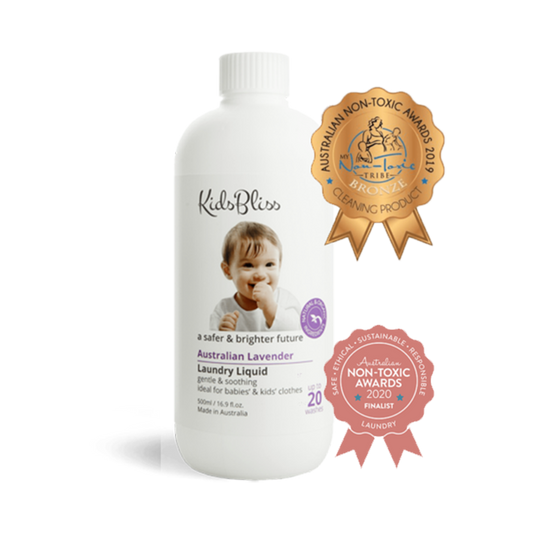
KidsBliss Biomimetic Pediatric Fabric Skincare is formulated to resolve these physical-chemical challenges. It uses an optimized blend of skincare-grade surfactants, organic botanical extracts, and natural buffers to deliver deep cleanliness and fiber protection.
1. Skincare-Grade Surfactant System: Coco-Glucoside and Coco-Betaine
Instead of harsh, cheap industrial anionic surfactants like Sodium Lauryl Sulfate (SLS) or Linear Alkylbenzene Sulfonate (LAS)—which strip lipids, damage the skin barrier, and leave a sticky alkaline film on fabrics—KidsBliss utilizes a dermatologically superior surfactant system:
-
Coco-Glucoside (Non-Ionic Barrier Protector): Derived from coconut oil and fruit sugars, Coco-Glucoside is an exceptionally mild, non-ionic surfactant. In water, it forms highly stable, spherical micelles that encapsulate organic oils and soils without disrupting the delicate lipid bilayer of the infant skin barrier or stripping natural protective oils (like wool's lanolin).
-
Coco-Betaine (Amphoteric Irritation Shield): Derived from coconut oil, this amphoteric surfactant acts as a natural conditioning agent. It reduces the irritation potential of the overall formula, neutralizing static charge on natural fibers and maintaining fabric softness without coating them in the greasy, hydrophobic film of commercial cationic softeners.
2. Saponin Cleaning: Organic Soapwort Extract
KidsBliss incorporates organic soapwort extract, containing natural triterpenoid saponins. Saponins are nature's surfactants, featuring a hydrophilic carbohydrate head and a lipophilic triterpene tail. They naturally lower the surface tension of wash water, allowing it to penetrate deep into the dense weaves of cotton, merino, and bamboo. Saponins physically lift and suspend soils in the wash bath, ensuring they rinse away completely without leaving harsh chemical residues.
3. Natural pH Buffering and Limescale Dissolution
Through a precise combination of citric acid and sodium citrate, KidsBliss buffers the wash bath to a stable, slightly acidic pH of 4.8. This mildly acidic environment serves a dual chemical purpose:
-
Halting Reactive Dye Hydrolysis: Under alkaline conditions ($pH > 9.0$), covalent bonds between reactive dyes and cellulose undergo nucleophilic cleavage, causing rapid color fading and dye transfer. KidsBliss’s pH 4.8 stabilizes these covalent bonds, preserving bright colors and delicate hand-painted prints through multiple wash cycles.
-
Mineral Deposition Prevention: In hard water, alkaline detergents precipitate calcium and magnesium carbonates (CaCO_3 and MgCO_3) directly onto fabric fibers, creating an abrasive mineral crust that causes stiffening and fiber wear. The slightly acidic $pH$ of KidsBliss dissolves these mineral deposits, keeping fabrics naturally soft and pliable without synthetic softeners:
CaCO_3 + H^+ → Ca^2+ + HCO_3^-
4. Natural Preservation: 100% Pure Australian Lavender Oil
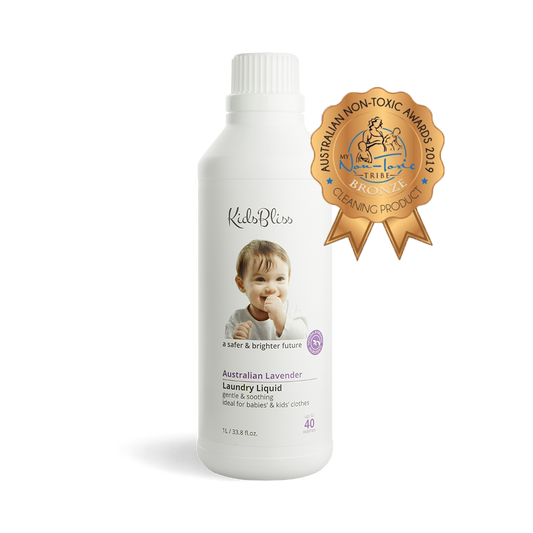
KidsBliss is infused with 100% pure organic Australian lavender oil, completely avoiding synthetic "parfum" (which is a primary trigger for pediatric contact allergies and respiratory sensitivities). Pure lavender oil provides natural antiseptic and antifungal properties, ensuring a hygienic clean for reusable cloth diapers and blankets while offering a calming aromatherapy experience.6. The Comparative Science of Pediatric Garment Care
The physical-chemical behaviors of natural fibers across the pH spectrum highlight why pH 4.8 is the optimal target for both baby skin health and fabric preservation.
Macromolecular Fiber Kinetics across the pH Spectrum
| Environment | Keratin (Superfine Merino) | Cellulose (Organic Cotton & Bamboo) | Pediatric Skin Barrier Impact |
|
pH < 4.0 (Highly Acidic) |
Protonation of carboxyl groups replaces salt bridges with weak hydrogen bonds; wet elastic modulus drops. | Risk of acid-catalyzed glycosidic hydrolysis under high temperatures, causing fiber thinning. | Can cause localized skin irritation if $pH$ drops below physiological limits. |
|
pH 4.8–5.5 (KidsBliss Target) |
Optimal Structural Stability. Net charge is zero; salt bridges are fully formed. Cuticle scales remain flat and smooth. | Minimal radial swelling. Cotton pectic acids are preserved. Halts reactive dye bleeding and dissolves limescale. | Supports the physiological acid mantle. Protects infant lipid matrix and prevents eczema. |
|
pH 6.0–8.0 (Neutral / Mild) |
Ionic salt bridges begin to weaken; slight cuticle scale swelling occurs. | Stable cellulose matrix, but cannot dissolve hard water minerals or reverse dye fading. | Safe, but lacks the buffering capacity to neutralize residual alkaline laundry residues. |
|
pH > 8.5 (Standard Detergents) |
Carboxyl groups deprotonate; electrostatic repulsion forces cuticle scales to swell and flare. Disulfide bonds cleaved. | "Alkaline peeling" depolymerizes bamboo cellulose. High radial swelling disrupts hydrogen bonds. Limescale precipitates. | Destroys the neonatal acid mantle. Strips lipids, increases TEWL, and triggers contact eczema. |
7. Conclusions and Recommendations
The physical chemistry of wet care demonstrates that maintaining a mildly acidic environment of pH 4.8 is a scientific necessity for both neonatal skin health and luxury fiber preservation. By aligning the wash and rinse microenvironment with the isoelectric point of protein fibers and avoiding the alkaline swelling and depolymerization of cellulose, KidsBliss prevents the chemical and mechanical degradation caused by standard detergents.
Transitioning the fabric care routine to KidsBliss Biomimetic Pediatric Fabric Skincare moves beyond simple skin-compatibility claims. It provides parents with a scientifically validated care standard to preserve the softness, color, and lifespan of their premium babywear investments while supporting their baby's delicate skin barrier.