
🎧 Busy Parent? Listen to the Quick Summary (5 mins)
I. The Critical Context: Decoding December UV in Melbourne and Sydney
The onset of the Australian summer holidays in early December presents a unique and critical challenge for parents: balancing the desire for active, outdoor play with the country’s dangerously high levels of solar ultraviolet (UV) radiation. Australia experiences some of the highest UV levels globally, necessitating a public health strategy centered on constant vigilance and proactive protection [1].
The Australian UV Crisis: Why December is Danger Time
UV radiation is fundamentally different from heat. It is an invisible form of energy that cannot be seen or felt, making it difficult for individuals to judge the risk based on perceived comfort [1]. UV radiation is the primary cause of skin cancer, and exposure levels are entirely independent of ambient air temperature or clear skies [1]. In fact, UV radiation can be just as potent on a cool or overcast day as it is on a hot, clear day, although thick cloud cover can provide some filtration [1].
The Australian health authorities designate a UV Index of 3 or above as the threshold requiring sun protection measures [2, 3]. At this level, unprotected exposure can start causing damage to the skin in as little as 15 minutes [1]. While the highest average clear-sky UV values across Australia typically peak in January, reaching 11 or more across virtually the entire continent [2], December marks the immediate precursor to this extreme period. This means that parents must disregard the perception that risk correlates with temperature (infrared radiation) and instead rely solely on the predicted UV Index [1]. The primary focus must shift from how hot the day feels to how strong the invisible UV rays are, as the failure to make this distinction can lead to a dangerous lapse in vigilance during the deceptively pleasant days of early summer.
Pinpointing Sun Protection Times: The Non-Negotiable Window
To ensure safety, Australian parents are strongly advised to check the daily UV Index forecast, which is readily available through resources such as the Bureau of Meteorology (BoM) website or the SunSmart app [3]. The key public health instruction is simple: follow the five SunSmart steps whenever the UV is forecast to reach 3 or above [1].
For major population centers in the south-east, the December risk window is substantial and consumes the majority of typical daytime play hours.
Table 1: Melbourne and Sydney December Sun Protection Times
|
City/State |
Peak Sun Protection Window (UV 3+) |
Highest Risk Period (Seek Shade) |
Source |
|
Melbourne (VIC) |
Typically 9:20 AM to 4:40 PM |
11:00 AM – 3:00 PM (Daylight Saving Time) |
[4, 5] |
|
Sydney (NSW) |
Typically 10:00 AM to 4:00 PM |
Limit exposure during these hours |
[6] |
In Melbourne, sun protection is generally required from September through April [5]. Specifically in December, the UV levels mandate protection for a period often spanning from 9:20 AM until 4:40 PM [4]. Furthermore, because December falls under Daylight Saving Time (DST), the absolute peak radiation period shifts to 11:00 AM to 3:00 PM [5]. Similarly in Sydney, the guidance suggests limiting exposure between 10:00 AM and 4:00 PM [6]. This precise safety timing dictates that almost all mid-day, high-energy outdoor activities must be relocated to fixed, dense shade or shifted entirely to the early morning or late afternoon. The core strategy for sun safety in early December is the strategic seeking of shade during these peak hours.
The Vitamin D Balance: Minimal Exposure, Maximum Caution
While UV exposure poses a cancer risk, it is also the best natural source of Vitamin D, making a balance necessary for overall health [1]. Health recommendations maintain that when the UV Index is 3 or above, most people can satisfy their Vitamin D needs with just a few minutes of sun exposure to the hands and arms, typically taken during the mid-morning or mid-afternoon on most days of the week [5, 7]. Crucially, this brief, intentional exposure should occur outside the peak UV period of 11:00 AM to 3:00 PM DST. Prolonged, unprotected outdoor play is never necessary for Vitamin D synthesis and only escalates skin cancer risk. This brief required exposure should be complemented by dietary sources of Vitamin D, such as oily fish like mackerel and salmon, eggs, and fortified dairy products [7].
II. The SunSmart Philosophy: Preparing for Safe Play
A successful sun safety strategy involves transforming official guidelines into practical habits and engaging activities. The Australian SunSmart campaign is built on five key actions that should be implemented whenever the UV Index reaches 3 or above [1].
The Full Toolkit: Slip, Slop, Slap, Seek, Slide
-
Slip: Clothing must be protective. Choosing clothing that covers the body and uses high UPF (Ultraviolet Protection Factor) fabric provides the first line of defence.
-
Slop: Broad-spectrum SPF 30+ (or higher) sunscreen is essential [4]. It must be applied liberally and correctly, and crucially, reapplied every two hours [4]. Reapplication is needed more frequently after swimming or activities that induce heavy sweating [4, 6]. (For a detailed analysis of Australia's top-selling sunscreens and advice on chemical filters, consult the KidsBliss Sun Safety Pillar Guide: The Ultimate Guide to Child Sun Safety in Australia).
-
Slap: Hats should be broad-brimmed. While baseball caps offer partial protection, a broad-brimmed, bucket, or legionnaire style hat provides better coverage for the face, neck, and ears [8].
-
Seek: Shade is the paramount defence during the peak UV hours (10 AM to 4 PM). Utilizing natural shade from dense trees or, ideally, fixed structures like shade sails and pergolas is vital [1].
-
Slide: UV-blocking sunglasses are necessary to protect the eyes from damage [6]. Look for wide-rimmed glasses that meet the appropriate Australian standards [6, 8].
Special attention must be paid to reflective surfaces. The UV dose children receive can be significantly increased when they play near bright surfaces such as sand or water, due to reflection [6]. Therefore, even when under partial shade near a sandpit or pool, protective clothing, high-quality sunglasses, and generous sunscreen application remain indispensable.
Activity #1: The UV Early Warning System (DIY UV Bracelet)
One of the most effective ways to promote sun safety compliance among children is by giving them a personal, tangible early warning system. The DIY UV bracelet is an activity that educates children on the invisible nature of UV radiation while offering real-time feedback on environmental risk [9].
The science behind this craft relies on special items called UV beads. These beads contain a photochromic dye, the molecules of which change shape and colour when exposed to UV light [10]. When removed from the UV source, the dye reverts to its original colour (usually white or translucent) [10].
Instructions for Creating the UV Bracelet:
-
Gather Materials: Collect UV beads (which can be purchased online), ordinary pony beads for decoration, and a means of stringing the beads, such as a pipe cleaner or 1mm stretch cord [10, 11].
-
Assembly: Cut the stretch cord or pipe cleaner to size. Thread the UV beads and pony beads, creating a personalized pattern. If using stretch cord, secure the ends with two firm knots [11]. If using a pipe cleaner, twist the ends together and trim any sharp excess [10].
-
The Test: Wear the bracelet outside and watch the white UV beads change colour, often within a minute, demonstrating the presence and strength of the UV rays [11].
This activity ensures that sun safety becomes a game rather than a chore. The brightly coloured beads serve as a visual signal; if the bracelet is displaying intense colour, it confirms that the UV Index is high and the child must actively seek fixed shade or be fully protected [9]. This ownership over their own warning system dramatically improves adherence to safety habits.
III. The Fun in the Shade: 30 Expert-Approved Sun-Safe Activities
The following activities are specifically designed to keep children engaged, cool, and happy during the demanding hours of the December sun. They are categorized based on the necessary shade infrastructure, aligning with the requirement to keep children out of direct sun exposure between approximately 10:00 AM and 4:00 PM.
A. Sensory & Water Play (Full Shade Mandate: The 11 AM - 3 PM Core Strategy)
These highly engaging and cooling activities are ideal for the peak UV period when children must remain stationary in permanent, deep shade—such as under a patio, veranda, or high-density shade sail. The sustained focus provided by sensory play is highly effective in mitigating boredom and heat during the critical mid-day hours.
|
# |
Activity Name |
Description and Benefits |
|
2 |
The Shaded Toy Car Wash & Mud Spa |
Set up two basins in the shade: one with mud (or dirt and water) and one with soapy water. Children can run toy cars and trucks through the "spa" and then use sponges to scrub them clean in the "car wash." This activity is sensory, encourages fine motor development, and provides natural cooling ``. |
|
3 |
Backyard Water Play Wall |
Utilising recycled materials like plastic bottles and tubing attached to a vertical surface, create a wall where water can be poured and routed down various paths. This promotes engineering skills and cooling sensory play [12, 13]. |
|
4 |
Inflatable Splash Zone (Compact Setup) |
For smaller yards, avoid full pools and opt for compact water features such as a small kiddie pool, a splash pad, or a rented smaller inflatable slide that fits neatly into a shaded corner [14, 15]. This delivers a high fun factor without the extensive space requirements. |
|
5 |
Ice Block Excavation (Frozen Treasure) |
Freeze small toys or coloured objects inside large blocks of ice. Children use small tools, droppers, and warm water to chip away at the ice, excavating the "treasure." This is excellent for sustained sensory focus, problem-solving, and staying cool. |
|
6 |
Shaded Potion Lab (Nature Mixology) |
Provide water, bowls, spoons, and natural materials collected from the yard (leaves, flowers, dirt). Children can mix, mash, and create "potions," fostering imaginative play and safe sensory exploration [16, 17]. |
|
7 |
Shade-Side Fishing Game (DIY Rods) |
Use a small tub of water or a kiddie pool. Create simple fishing rods using sticks and string, attaching magnets or hooks to catch floating magnetic or looped objects. This encourages hand-eye coordination and can be made into a DIY craft first [18, 2]. |
|
8 |
The Mini Pond Project |
If space allows, create a contained, small water feature using a large basin, recirculating water, and aquatic plants. This quiet activity invites observation of nature and provides the calming sound of water, attracting birds and wildlife ``. |
B. Creative, Imaginative & Educational Play (Shade Structures or Dense Canopy)
These activities foster creativity, literacy, and cognitive development while requiring children to remain in a fixed, safe, shaded location, conserving energy during the peak heat and UV of the day.
|
# |
Activity Name |
Description and Benefits |
|
9 |
Epic Fort/Cubby Build (The Shade Den) |
Using blankets, chairs, ropes, and clips, construct a large, permanent fort or cubby under a verandah, deck, or dense tree canopy [18, 2]. This space becomes the designated "UV-Free Zone" for reading, role play, and quiet games. |
|
10 |
Shade Mapping & Shadow Tag |
A clever educational activity where children use chalk or objects to mark the boundaries of shadows throughout the late afternoon. This teaches spatial awareness and demonstrates the sun’s movement, turning shade-seeking into a STEM learning experience. |
|
11 |
Shaded Sidewalk Chalk Art |
Move the chalk activities to a shaded area, such as a covered patio, carport, or large undercroft [18, 2]. This allows for creative expression without direct exposure. |
|
12 |
Backyard Camping Adventure |
Set up a tent or air mattress in the deepest shade of the backyard for quiet, imaginative play during the day, extending into a fun, no-UV star gazing session or sleepout at night [18, 2]. |
|
13 |
I Spy: Spot the Shade (Variation) |
Adapt the classic "I Spy" game ``. The player who is "it" must spy objects that are in the shade. The clue could be "I spy something dark because it is completely covered by the tree." This subtly reinforces the concept of seeking shade [19]. |
|
14 |
The SunSmart Picnic & Read-Aloud |
Schedule lunchtime and reading time in a secure, shaded spot. This promotes hydration, literacy, and relaxation while ensuring the family stays protected during the highest UV period [18, 2]. |
|
15 |
Nature Scavenger Hunt (Shade-Bound) |
Create a list of items that can only be found in shaded areas (e.g., damp leaves, specific types of bark, cool stones). This encourages observation skills without excessive sun exposure [18, 2]. |
|
16 |
DIY Leaf & Stick Sun Decor |
Collect fallen sticks and leaves, decorate them with paint or glitter, and tie them onto a larger coat hanger or stick at different lengths [8, 4]. This creative craft can then be used as a decoration for the cubby or shade zone. |
|
17 |
Backyard Movie Theatre |
Hang a white sheet in the shade (or wait until sunset) and use a projector for an outdoor family movie night. This provides safe, low-impact entertainment. |
|
18 |
Painting Rocks or Planters |
A highly therapeutic and creative activity best performed on a cool, shaded table. Painted rocks can be hidden in garden beds or used to decorate outdoor planters. |
|
19 |
Shaded Construction Site (Dirt & Diggers) |
Set up a dedicated area for digging and moving dirt in deep shade. Provide small spades, dump trucks, and buckets. This allows for excellent sensory and gross motor play without sun risk. |
|
20 |
Pillow Obstacle Course |
If a garage or covered deck is available, use pillows, cushions, and low objects to create an indoor/outdoor obstacle course that encourages running and coordination in a UV-free environment. |
C. Active Games & Movement (Time-Restricted or Permanent Structure)
High-energy, sustained activities must be strictly confined to the time slots where the UV Index is below 3, typically early morning (before 9:30 AM) or late afternoon (after 4:30 PM). If they must be played during the day, they require the most expansive, permanent shade possible, such as a large covered court or patio.
|
# |
Activity Name |
Description and Benefits |
|
21 |
Early Morning Soccer/Kickball Practice |
Schedule team sports or high-energy running games for the narrow window immediately after sunrise, before 9:30 AM [18, 2]. This maximizes fitness while minimizing sun exposure. |
|
22 |
Shaded Tetherball Challenge |
Tetherball can be installed inexpensively using an upcycled tire and metal pole and is highly portable [12, 13]. The ability to roll the setup into the shade makes it a perfect game for maximizing protection while engaging in fast-paced coordination drills [12, 13]. |
|
23 |
Shaded Basketball (H.O.R.S.E) |
If the driveway or court is covered by a shade sail or solid structure, games like H.O.R.S.E. or free-throw practice can be safely conducted [18, 2]. |
|
24 |
"Hot Lava" Challenge (Shade Edition) |
Adapt the indoor game outside by using outdoor sturdy items like large rocks, logs, stepping stones, and patio furniture as safe islands [18, 2]. Moving these objects to design the course is excellent for strengthening activities. |
|
25 |
Fence Volleyball/Badminton |
Use a net or a simple rope along the edge of a fully shaded area (like a side yard bordered by a high fence) for low-impact volleyball or badminton [18, 2]. |
|
26 |
Water Balloon Target Practice |
Set up targets on a shaded fence or deck and use water balloons or sponges to practice throwing accuracy. This is a cooling activity that should be time-restricted or played in deep shade [18, 2]. |
|
27 |
Shaded Pogo Stick/Scooter Skills |
Practice balancing and gross motor skills on pogo sticks or scooters in a shaded driveway or carport [18, 2]. |
|
28 |
Stomp Rockets Launch |
These toy rockets are launched by stomping on an air pump [18, 2]. Set up the launcher in a shaded spot and aim for targets in a partially shaded lawn area. |
|
29 |
Roofball (Shaded Catch Practice) |
Best played near a one-story home, one person throws a tennis ball onto the roof from the shadowed side of the house, and the other catches it (3 points for a direct catch, 2 for a first bounce catch) [18, 2]. This uses the house itself as a massive shade structure and sneaks in math skills. |
|
30 |
Star Gazing (The Ultimate Shade) |
The final and safest activity is enjoying astronomy after dark [18, 2]. With zero UV risk, children can relax, use a telescope, or simply observe the southern hemisphere's celestial displays. |
IV. Localized Shady Play Directory: Melbourne and Sydney Resources
Successfully executing the "Seek Shade" mandate requires access to reliable, shaded public facilities. The primary consideration for expert-approved shady play in high UV months is the existence of fixed shade infrastructure, as the transient shadow cast by natural trees often moves too quickly to provide continuous protection during peak hours [20]. Playgrounds offering modern shade sails or large, fixed umbrellas are highly valued, alongside essential amenities like fencing, toilets, and water play areas.
Melbourne (VIC): Finding Permanent Cover
Victoria boasts a large network of shaded playgrounds, with Melbourne Playgrounds reporting over 430 such locations across the state [20]. When selecting a destination for prolonged peak-hour play, parents should confirm that the shade is fixed and dense.
Table 2: Melbourne Shaded Playground Directory Highlights
|
Playground (Suburb) |
Region |
Key Shade Feature |
Special Features |
Source Data |
|
Flagstaff Gardens Playground (West Melbourne) |
Inner/CBD |
Well shaded by dense trees |
Traditional play equipment, large open lawns [13, 21, 12] |
[13, 21, 12] |
|
Plum Garland Memorial Playground (Albert Park) |
Inner South |
Shade Sails |
Close to the beach, high-quality fixed coverage [20, 16] |
[20, 16] |
|
Mode Park (Kalkallo) |
North |
Shade Structure/Park |
Integrated Splash Park, catering to all ages [15, 22] |
[15, 22] |
|
Allnutt Park (Bentleigh) |
South East |
Shade Sails |
Variety of equipment under fixed shade [20, 16] |
[20, 16] |
|
Docklands Park Playground (Docklands) |
Inner West |
Partial Shade/Nautical Theme |
Interactive elements, sand play, near cafes [13, 21, 12] |
[13, 21, 12] |
|
Lincoln Square Playground (Carlton) |
Inner North |
Shade from mature trees and structures |
Quiet space, near city amenities [13, 21, 17, 12] |
[13, 21, 17, 12] |
For families living in the suburbs, locations like Hansen Reserve in Airport West (partial tree shade), Greythorn Park in Balwyn North (shade sails), and Hodgson Reserve in Bentleigh (shade sails) offer excellent examples of local parks prioritizing sun protection [20, 16].
Sydney (NSW): Harbour to Suburbia Shaded Spots
Sydney offers various shaded play spaces, many featuring innovative designs that incorporate water play for cooling. Parents can utilize the City of Sydney's resources to identify areas with superior fixed cover [22, 8].
Table 3: Sydney Shaded Playground Directory Highlights
|
Playground (Suburb) |
Region |
Key Shade Feature |
Special Features |
Source Data |
|
Tumbalong Park Playground (Sydney CBD) |
Inner-City |
Extensive shaded seating |
Large urban gathering space for families [22, 8] |
[22, 8] |
|
Pirrama Park Playground (Pyrmont) |
Inner West |
Large Yellow Umbrellas |
Large sandpit focus, harbourside location [22, 8] |
[22, 8] |
|
Warrina Street Oval (Berowra) |
North Shore |
Sunshades and Sail Cloths |
Dedicated Water Play Area, fully fenced, BBQ facilities [23, 5] |
[23, 5] |
|
St Ives Village Green (St Ives) |
North Shore |
Three Huge Shade Cloths |
Fully-fenced, sheltered seating, toilets, skate park [23, 5] |
[23, 5] |
|
Mary O'Brien Reserve (Zetland) |
Inner South |
Shade from structures |
Water play area with fountain [22, 8] |
[22, 8] |
|
Sydney Park Playground (Alexandria) |
Inner South |
Shade structures and trees |
Large adventure playground with diverse equipment [22, 8] |
[22, 8] |
Locations such as Warrina Street Oval and St Ives Village Green demonstrate best practice by not only installing large shade cloths over the equipment but also providing essential infrastructure like fencing, toilets, and shaded picnic areas, enabling families to utilize the area safely for extended periods during the December school holidays [23, 5].
V. Conclusions and Recommendations for a Sun-Safe Australian Holiday
Effective sun protection in early Australian summer hinges entirely on shifting the perception of risk away from temperature and toward the invisible threat of UV radiation. The data clearly shows that for Melbourne and Sydney in December, the required sun protection window consumes the vast majority of the daytime, peaking between 11:00 AM and 3:00 PM (DST).
Actionable Recommendations
-
Embrace the Shade Shift: The primary strategy for active, safe outdoor play must be temporal adjustment. High-energy activities, such as cycling, running, or ball games, should be strictly scheduled for the cool, low-UV windows before 9:30 AM and after 4:30 PM. The critical hours between 10:00 AM and 4:00 PM must be reserved exclusively for deep-shade activities, such as water play, sensory stations, cubby building, and shaded creative projects.
-
Utilize Fixed Infrastructure: When visiting public areas, prioritize playgrounds and parks that feature fixed, modern shade sails or large pergolas, as these offer reliable protection against the high UV levels characteristic of the Australian summer [20].
-
Ensure Full Compliance: The five SunSmart steps must be followed rigorously. Protective clothing, broad-spectrum SPF 30+ sunscreen (reapplied every two hours or after swimming/sweating), broad-brimmed hats, UV-blocking sunglasses, and the active seeking of shade are non-negotiable requirements for any outdoor December activity [4, 6].
-
Incorporate Safety Education: Activities like creating the UV Early Warning Bracelet transform abstract scientific concepts into a fun, visual tool, allowing children to take ownership of their own sun safety habits and visually confirming when sun protection is critical.
A. The Essential Kit: After-Sun Care and Insect Defence
While sun protection measures are preventative, a complete sun-safe routine requires two further essentials for the Australian outdoors:
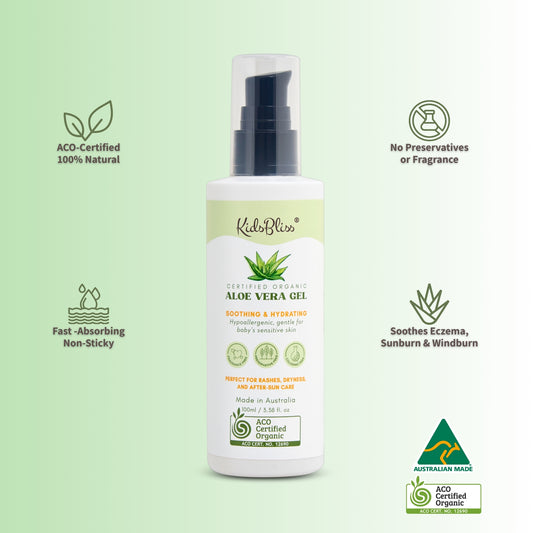
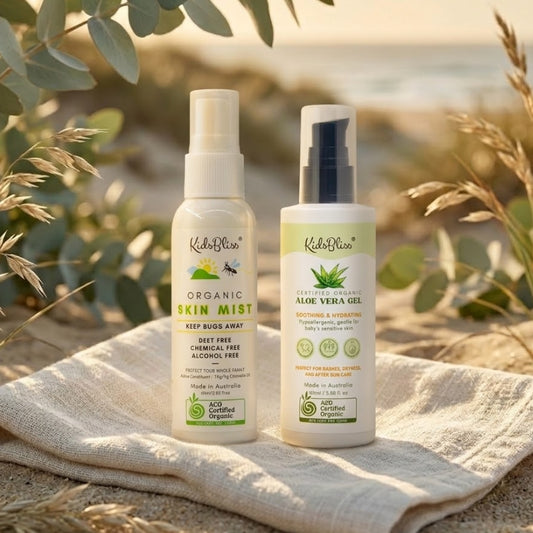
1. Soothing Post-Sun Care (Aloe Vera): Even with the best precautions, sun exposure can leave skin dry and vulnerable . The primary after-sun essential is a quality moisturiser, especially one containing **Aloe Vera Gel** . Aloe vera is well-regarded for its anti-inflammatory compound, aloin, which provides a soothing effect on mild sunburns and helps to moisturise the skin, potentially preventing peeling . Applying a cool, soothing gel after a bath helps to lower body temperature and offer immediate relief .
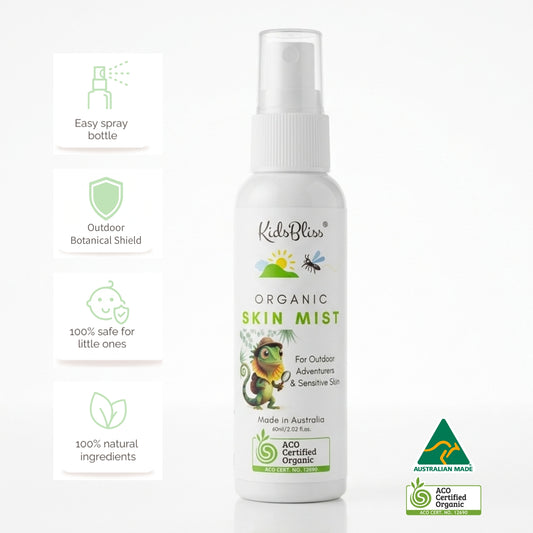
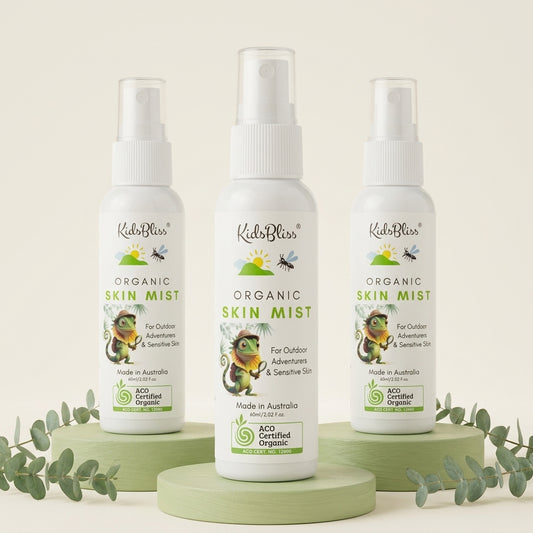
2. Insect Repellent for Low-UV Hours: The key times for sun-safe play—early morning and late afternoon/dusk—are also when mosquitoes and other biting insects are most active. To keep outdoor adventures truly blissful, the application of insect repellent is just as critical as sunscreen during these low-UV windows. Parents seeking products for young children should look for gentle, DEET-free, and Picaridin-free formulas, such as those registered with the Australian Pesticides and Veterinary Medicines Authority (APVMA) and specifically designed for sensitive skin, babies (from 3+ months), and pregnancy ``.
By combining meticulous timing, adherence to the full SunSmart toolkit, and the utilization of imaginative, shade-based activities, Australian families can ensure that the December school holidays are filled with fun, engagement, and most importantly, safety from the serious risks posed by the summer sun.
Ready for a Summer of Safe Adventures?
Gear up your family with all the necessary KidsBliss On-the-Go Essentials, including broad-brimmed hats, protective swimwear, quality sunscreen, soothing Aloe Vera Gel, and effective, sensitive-skin Insect Repellent. For more in-depth sun safety information, explore our KidsBliss Sun Safety Pillar Guide and other cluster blogs on "Parenting Hacks for a Cool Summer" and "A Paediatric Toxicologist's Report on Chemical UV Filters" on the KidsBliss site.