
🎧 Busy Parent? Listen to the Quick Summary (5 mins)
The physiological transition of the neonate from the intrauterine environment to the external world is characterized by a rapid and complex adaptation of the cutaneous barrier. This period, often referred to as the "nesting" phase by expectant parents, represents a critical window for the establishment of the skin’s defensive mechanisms, most notably the acid mantle and the structural consolidation of the stratum corneum.1 Pediatric dermatology has increasingly recognized that the primary interface between an infant and their environment is not air, but textile. Given that a newborn remains in near-constant contact with fabrics—including swaddles, bedding, and clothing—for twenty-four hours a day, the chemical residues remaining on these fibers must be viewed as functionally equivalent to leave-on skincare products.3 Traditional laundry hygiene, dominated by high-alkalinity surfactants and aggressive enzymatic additives, frequently operates in direct opposition to the biological requirements of the developing infant skin, leading to a high prevalence of irritant contact dermatitis and the exacerbation of atopic conditions.4
The Physiology of the Neonatal Cutaneous Interface
The structural architecture of infant skin is fundamentally distinct from that of an adult, possessing a stratum corneum that is approximately one-third the thickness of mature skin.4 This anatomical thinness results in a significantly higher surface-area-to-volume ratio and an increased permeability to exogenous chemicals. The "Step 1" of a pediatric skincare routine is often misidentified as the application of topical emollients; however, the true foundational step is the regulation of the fabric interface.3
Recent epidemiological data indicates that approximately 28% of infants suffer from contact dermatitis specifically triggered by residual surfactants and optical brighteners found in mass-market laundry detergents.4 This "textile dermatitis" is often a preventable pathology, yet it remains under-diagnosed as it frequently mimics the distribution of atopic dermatitis. Unlike traditional eczema, which favors flexural creases, detergent-induced irritation follows a "textile pattern," affecting areas of maximal clothing contact such as the trunk, extensor surfaces of the limbs, and the diaper area.4 The mechanism of this irritation is rooted in the cytotoxic damage to skin cells caused by aggressive surfactants which dissolve the lipid bilayer and denature essential keratin proteins.4
The Role of the Acid Mantle in Barrier Maturation
The skin surface pH of a healthy adult is slightly acidic, typically ranging between 4.5 and 6.0.1 This acidity, termed the "acid mantle," is formed by the secretion of sweat and sebum, which are subsequently metabolized by the skin’s microbiome into free fatty acids.8 For the neonate, the establishment of this acidic environment is a vital developmental milestone. The acid mantle serves three primary biological functions:
-
Antimicrobial Defense: The acidic environment inhibits the colonization and multiplication of pathogenic organisms, such as Staphylococcus aureus, which is a primary driver of secondary infections in eczematous skin.1
-
Lipid Processing: The enzymes responsible for synthesizing the hydrophobic lipid barrier, which prevents transepidermal water loss (TEWL), are only active at an acidic pH. Alkalinity inhibits these enzymes, leading to a compromised permeability barrier.2
-
Cohesion and Desquamation: Proteases that regulate the shedding of dead skin cells (corneocytes) are pH-dependent. Disruption of the pH balance leads to impaired desquamation, resulting in the scaly, dry, and "stiff" skin often seen in infants exposed to harsh detergents.2
The Surfactant Paradox: Skincare Grade vs. Industrial Grade
The core function of any detergent is the reduction of water surface tension to emulsify and remove soils. However, the molecular structure and electrical charge of the surfactants utilized determine the severity of their interaction with the skin barrier.8 Mass-market detergents almost exclusively utilize anionic surfactants, particularly Sodium Lauryl Sulfate (SLS) and Sodium Laureth Sulfate (SLES), due to their low cost and high foaming capacity.5
The Cytotoxicity of Sodium Lauryl Sulfate (SLS)
Sodium Lauryl Sulfate is a potent irritant used as a standard control in dermatological patch testing to induce skin barrier disruption.11 Its small molecular size allows it to penetrate deep into the stratum corneum, where it interacts with the lipid matrix and cell membranes. Studies have shown that even at low concentrations, SLS causes significant increases in TEWL and laser Doppler flowmetry measurements, indicating vascular dilation and inflammation.13
|
Parameter |
Sodium Lauryl Sulfate (SLS) |
Alkyl Polyglucosides (APG) |
|
Ionic Charge |
Anionic (Negative) |
Non-Ionic (Neutral) |
|
Molecular Size |
Small/Penetrative |
Large/Barrier-Safe |
|
Protein Denaturation |
High potential 11 |
Negligible 13 |
|
Recovery Time (TEWL) |
Up to 10+ days 13 |
< 3 days 13 |
|
Barrier Integrity |
Strips essential lipids 15 |
Maintains moisture barrier 10 |
Research conducted on the kinetics of skin reactions demonstrates that while SLS produces a pronounced and lasting irritation, the skin reaction to glucosides is frequently undetectable, even at high concentrations.13 This confirms that glucosides, such as the Coco-Glucoside used in KidsBliss, represent a superior alternative for sensitive pediatric skin.
The Chemistry of Coco-Glucoside: A Non-Ionic Breakthrough
Coco-Glucoside is a non-ionic surfactant synthesized from renewable plant materials—typically coconut oil and fruit sugars.10 Unlike anionic surfactants, non-ionic molecules do not carry an electrical charge, which fundamentally alters their behavior at the dermal interface. They do not bind to the positively charged proteins of the skin, thereby avoiding the denaturation of keratin that leads to the "tightness" and irritation associated with traditional soaps.4
In high-end skincare formulations, Coco-Glucoside is prized for its biodegradability and its ability to maintain the skin’s moisture barrier while effectively removing impurities.10 When integrated into a laundry liquid, it ensures that any residual molecules trapped in fabric fibers remain inert upon contact with the skin. The lack of stripping effect ensures that the natural lipids of the infant’s skin are preserved, supporting the maturation of the stratum corneum rather than hindering it.4
Coco-Betaine: The Amphoteric "Irritation Reducer"
The KidsBliss formula incorporates a high percentage of Coco-Betaine, an amphoteric (or zwitterionic) surfactant that serves as a critical co-surfactant in gentle cleansing systems.3 Amphoteric surfactants possess both positive and negative charges, allowing them to act as buffers within a surfactant blend.
Scientific evaluations have established that the addition of 3–5% Coco-Betaine to a standard surfactant system can decrease the irritation potential of the entire formula by up to 50%.18 This reduction in irritancy occurs through the formation of mixed micelles. When anionic or non-ionic surfactants are present, the betaine molecules intercalate into the micellar structure, increasing the micelle size and reducing the concentration of free, un-micellized surfactant monomers in the solution.8 Because only these free monomers are small enough to penetrate the skin barrier, the larger mixed micelles remain on the surface, providing effective cleaning without sub-dermal penetration.8
Skincare Grade Validation: From Facial Wash to Laundry Room
The surfactants Coco-Glucoside and Coco-Betaine are not merely "gentle" cleaning agents; they are the "gold standard" ingredients for premium facial cleansers and baby shampoos.21 Brands such as Aesop, CeraVe, La Roche-Posay, and Kiehl's rely on these specific molecules to deliver efficacy to consumers with compromised skin barriers.17
|
High-End Skincare Brand |
Product Category |
Key Surfactants Used |
|
Aesop |
Gentle Facial Cleanser |
Coco-Betaine 17 |
|
CeraVe |
Foaming Facial Cleanser |
Coco-Betaine 17 |
|
COSRX |
Low pH Good Morning Gel |
Coco-Betaine 23 |
|
La Roche-Posay |
Toleriane Hydrating Cleanser |
Coco-Betaine 17 |
|
Evereden |
Protecting Baby Body Wash |
Coco-Betaine 17 |
|
KidsBliss |
Laundry Liquid |
Coco-Glucoside & Coco-Betaine 3 |
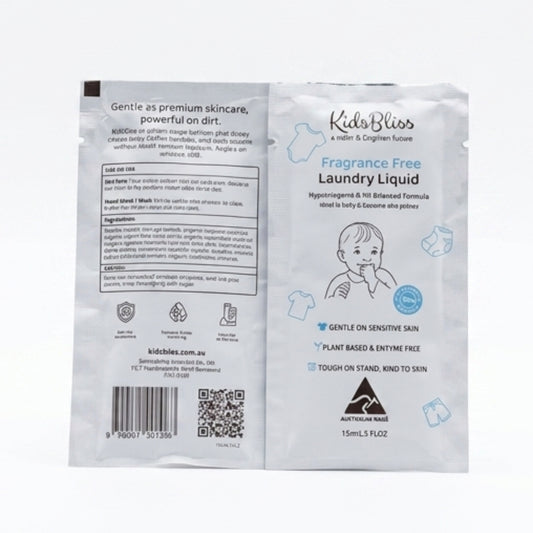
By utilizing these premium surfactants, KidsBliss elevates laundry care to the level of professional dermatological treatment. This represents a significant shift in the "nesting" philosophy, where the goal is no longer just "cleaning" but "fabric skincare".3
Skincare Grade Cleaning
The Fact-Check: Why KidsBliss uses premium skincare surfactants in baby laundry.
1. Surfactant Mildness
Stripping Potential: Glucosides vs. Industrial Salts
Note: Coco-Glucoside maintains the skin's moisture barrier instead of stripping it.
2. The "Buffer" Effect
How Coco-Betaine lowers the irritation potential of cleaners.
Fact: Coco-Betaine acts as an "irritation reducer," lowering risk by up to 50%.
3. The pH Advantage
Most detergents are alkaline (pH 9-13), which destroys the skin's acid mantle. KidsBliss maintains pH 4.5–5.0.
Softness Without Secret Chemicals
Standard Alkaline Wash
Alkalinity swells fibers and lifts cuticles, making fabric rough and scratchy.
KidsBliss Acidic Wash
The acidic pH naturally keeps fiber cuticles flat and supple—no softener needed.
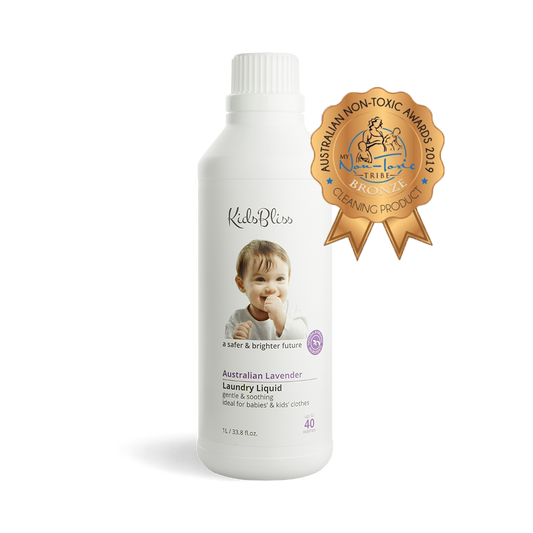
2019 Non-Toxic Cleaning Product Prize
Awarded to KidsBliss Laundry (Lavender variant) for ingredient safety.
Figure 1: Comparative analysis of surfactant-induced skin barrier disruption and pH-dependent fiber morphology.
The Non-Bio Imperative: Why Enzymes Pose a Risk to Infant Skin
Biological laundry detergents contain enzymes—most commonly proteases, amylases, and lipases—to catalyze the breakdown of organic stains.25 While these enzymes are highly effective at low temperatures, they present a unique toxicological scenario for infants. Standard "bio" enzymes are designed to break down protein-based materials like blood, sweat, and food residues by cleaving peptide bonds.25
However, the skin itself is composed primarily of proteins, including keratin and the enzymes responsible for barrier maintenance.9 Standard biological enzymes can microscopically attack the baby’s skin proteins if residual enzyme molecules remain in the fabric.3 For adults, whose skin barrier is thick and mature, this is rarely a clinical issue. For an infant, whose barrier is thin and often moist (increasing the likelihood of enzyme activation and penetration), these proteases can become a primary trigger for contact dermatitis.4
Mechanism of Enzyme-Induced Irritation
Proteolytic enzymes can penetrate compromised skin and exacerbate existing conditions such as atopic dermatitis.29 In the diaper area, the presence of fecal proteases is already a major cause of skin breakdown. Introducing exogenous proteases from laundry residues can create a synergistic effect that accelerates the loss of epidermal integrity.2 Furthermore, industrial studies have shown that enzymes have the potential to act as respiratory allergens if inhaled as dust or aerosolized from fabrics.31 By strictly maintaining a "Zero-Enzyme" formula, KidsBliss eliminates this potential source of irritation, ensuring that the fabric remains biologically inert against the baby's skin.3
The pH Advantage: Protecting the Acid Mantle
The disparity between the pH of infant skin and the pH of standard laundry detergents is perhaps the most significant chemical challenge to the neonatal barrier. Most supermarket detergents are highly alkaline, with pH values ranging from 9.0 to 13.0.4 This alkalinity is utilized by manufacturers to swell natural fibers, facilitating the removal of grease and dirt.
However, the neutralization of the skin's acid mantle by these alkaline residues has immediate and measurable consequences. Research suggests that a rise in skin pH can lead to increased TEWL, impaired organization of surface lipids, and a marked increase in susceptibility to infections by pathogens like Candida albicans and S. aureus.1
The Science of pH 4.5-5
KidsBliss Laundry Liquid is scientifically formulated to maintain a pH of 4.5 to 5.0.3 This range is perfectly aligned with the biological "sweet spot" of the skin's acid mantle. By maintaining an acidic environment, the detergent supports the skin's natural capacity to:
-
Inhibit pathogenic bacteria through the activation of antimicrobial peptides like dermcidin.2
-
Promote the maturation of the hydrophobic lipid barrier.2
-
Ensure normal desquamation and prevent the accumulation of dry, flaky skin.2
The importance of this pH alignment is underscored by the clinical observation that eczematous skin consistently exhibits a higher (more alkaline) pH than healthy skin.2 Using a pH-balanced detergent acts as a preventative measure, stabilizing the skin’s environment and reducing the likelihood of eczema flare-ups.3
Fabric Science: Maintaining the Suppleness of Organic Cotton and Bamboo
The nesting phase often involves a significant investment in high-quality natural fibers, such as organic cotton and bamboo. These materials are chosen for their breathability, moisture-wicking properties, and superior softness.35 However, the mechanical and chemical life of these fibers is heavily dependent on the pH of the laundry environment.
The Impact of Alkalinity on Cellulose Fibers
Textile fibers, particularly those of natural origin like cotton and bamboo, are highly sensitive to pH fluctuations. Alkaline detergents (pH 9–12) cause these fibers to swell excessively during the wash cycle.34 This swelling increases the surface roughness and can lead to the elution of the amorphous parts of the fiber, such as hemicellulose and lignin.37 Over time, this results in fiber degradation, making the clothes feel stiff and scratchy—a phenomenon often referred to as "fabric hardening".34
|
Fabric Type |
Effect of Alkaline pH (9-13) |
Effect of Acidic pH (4.5-5.0) |
|
Organic Cotton |
Fiber swelling, loss of strength, hardening 34 |
Maintains fiber integrity, suppresses swelling 34 |
|
Bamboo Viscose |
Accelerated degradation of cellulose chains 38 |
Preserves soft, "silk-like" hand-feel 3 |
|
Dyed Fabrics |
Rapid color fading and bleeding 34 |
Superior color retention and vibrancy 34 |
Eliminating the Need for Chemical Fabric Softeners
Because high-alkalinity detergents make fabrics stiff, parents are often forced to use fabric softeners to restore comfort. However, chemical fabric softeners work by depositing a coating of hydrophobic chemicals (often including synthetic fragrances and preservatives) onto the fibers.4 These coatings can trap irritants within the fabric and are themselves a common cause of contact dermatitis in infants.4
The acidic pH range of KidsBliss naturally keeps natural fibers supple and soft by preventing the swelling and degradation caused by alkalinity.3 This "chemistry-first" approach to softness eliminates the need for problematic softening additives, ensuring that the fabric touching the baby’s skin is as pure and non-toxic as possible.3
Validation of Excellence: The 2019 Non-Toxic Award
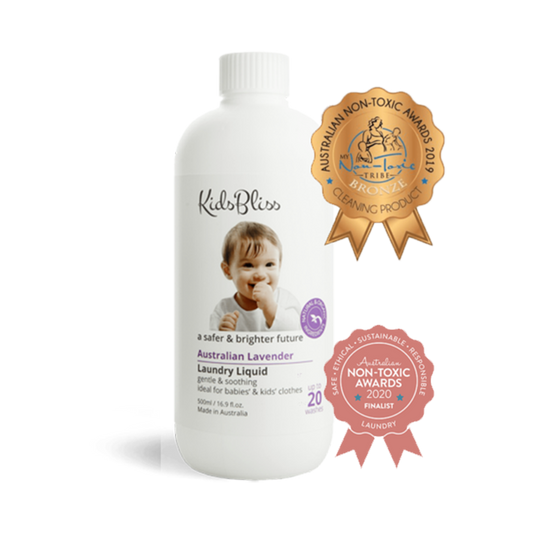
The "Trust Fact" for KidsBliss is anchored in its independent validation by the Australian Non-Toxic Awards. In 2019, the Australian Lavender variant of KidsBliss Laundry Liquid was awarded the Bronze Prize in the Household Cleaning category.43 This award is not merely a marketing accolade but a rigorous assessment of product safety, transparency, and social responsibility.
The judges' criteria for the 2019 award included:
-
Ingredient Integrity: The product was found to have "excellent" ingredients, primarily utilizing organic Soapwort extract and saponified coconut and olive oils.43
-
Clinical Performance: Real-world testing by parents with children suffering from eczema confirmed that the detergent did not cause flare-ups and left the skin clear.43
-
Non-Toxic Standards: The awards recognize products with the "highest ethics and standards in ingredients," ensuring that they are free from the common toxins and irritants found in mass-market alternatives.46
This award validates the brand’s commitment to "Fabric Skincare" and provides parents with the "peace of mind" required during the high-stress nesting stage.3
Explore the Award-Winning Lavender Variant.
Integrative Formula Overview and Clinical Conclusions
The KidsBliss laundry formulation represents a sophisticated intersection of traditional botanical wisdom and modern surfactant chemistry. By combining organic Soapwort and saponified plant oils with high-performance, skincare-grade Coco-Glucoside and Coco-Betaine, the formula achieves superior cleaning efficacy without the ecological or dermatological cost of synthetic salts.3
Summary of Formula Advantages
|
Formulation Feature |
Clinical Implication |
Benefit to Infant |
|
Coco-Glucoside |
Non-ionic cleaning 10 |
Prevents protein stripping and dryness |
|
Coco-Betaine |
50% irritation reduction 18 |
Buffers surfactant system for ultra-mildness |
|
Zero Enzymes |
Protease-free 3 |
Protects delicate skin proteins from attack |
|
pH 4.8 |
Acid mantle support 3 |
Fights bacteria and prevents infection |
|
Lavender & Herbs |
Natural antimicrobial 43 |
Calming scent without synthetic fragrance |
The evidence is clear: the laundry room is a critical determinant of pediatric dermatological health. By selecting a detergent that mimics the chemistry of high-end skincare, parents can effectively "Home Detox" their environment, providing a supportive foundation for their baby's developing skin barrier.3 The 2019 Non-Toxic Bronze Prize serves as the ultimate validation of this approach, confirming that KidsBliss is not just a cleaning product, but a vital first step in the lifelong journey of skincare.
As the "atopic march" continues to affect a growing percentage of the pediatric population, the move toward "Non-Bio," pH-balanced, and glucoside-based cleaning is no longer a luxury—it is a preventative necessity. For the nesting parent, the choice of a laundry liquid is an act of protection, ensuring that every swaddle and every sheet provides a safe, nurturing, and biologically compatible environment for the newest member of the family.3
Return to the Ultimate Nesting Checklist.