
🎧 Busy Parent? Listen to the Quick Summary (5 mins)
Introduction: The Threshold of Parenthood
The transition into the third trimester of pregnancy is a monumental threshold. It is the final gathering of strength, the physiological crescendo before birth, and a period of profound psychological preparation. For the expectant mother, this phase is often defined by a singular, overwhelming drive: the "nesting instinct." It is a primal urge, as old as the species itself, compelling parents to prepare a safe harbor for their offspring. However, in our modern industrial age, the definition of "safety" has evolved. It is no longer just about warmth and shelter; it is about purity. It is about navigating a complex landscape of invisible hazards—manufacturing residues, volatile organic compounds (VOCs), and synthetic chemicals—that permeate our domestic lives.
This comprehensive report serves as the strategic anchor for the "Nesting Campaign," designed not merely as a to-do list, but as a definitive educational resource. Its core objective is to guide expectant mothers through the transformation of their home into a sanctuary, moving from general organization to a deep, scientifically informed "detox" of the nursery environment. We introduce a paradigm shift in how we view this preparation: Fabric Skincare. This concept posits that the textiles wrapping a newborn—clothes, swaddles, sheets—are not merely fabrics but an extension of the skin itself, requiring the same level of dermatological consideration as premium face washes.
By synthesizing data from evolutionary biology, textile toxicology, and infant physiology, this report outlines a "trusted advisor" framework. We will explore the biological roots of the nesting energy and how to harness it safely. We will dismantle the "Enzyme Myth" prevalent in the laundry aisle, guiding parents toward the best baby laundry detergent in Australia for sensitive skin. Finally, we will establish the "Sanitation Station"—a holistic approach to inventory management that ensures every surface, from the teething toy to the hospital tray table, is properly secured.
1. The Biological Instinct: Understanding the Urge to Clean
To effectively manage the nesting phase, one must first understand its origins. The "nesting instinct" is not a myth, a social construct, or a byproduct of marketing; it is a validated biological phenomenon observed across mammalian species, from rodents to humans.1 Understanding the "why" behind the sudden burst of energy at 30 weeks helps expectant mothers harness it productively rather than being overwhelmed by it.
1.1 The Evolutionary Imperative
Evolutionary biologists argue that nesting serves a critical survival function. In ancestral environments, the immediate surroundings determined infant mortality rates. A disorganized, dirty, or exposed environment posed threats from predators, pathogens, and the elements. Therefore, natural selection favored mothers who experienced a distinct behavioral shift in late pregnancy—a drive to isolate, secure, and sanitize a birthing location.2
Research indicates that this instinct is characterized by two main behaviors:
-
Space Preparation: Cleaning, organizing, and stockpiling resources.
-
Social Selectivity: A tendency to withdraw from broader social circles and focus on the immediate family unit, effectively creating a "protective bubble" around the home.1
1.2 The Neurochemical Cocktail
The nesting drive is fueled by a complex interplay of hormones that peak in the third trimester.
-
Estradiol and Progesterone: These primary pregnancy hormones fluctuate, influencing energy levels and emotional states.
-
Oxytocin: Often called the "love hormone," oxytocin levels rise in preparation for labor and breastfeeding. It drives bonding behavior, which includes the preparation of the space where that bonding will occur.2
-
Prolactin: Known as the "nesting hormone" in birds, prolactin increases in humans to prepare for lactation, concurrently stimulating nurturing and protective behaviors.2
-
Adrenaline: As the due date approaches, bursts of adrenaline can provide the sudden "energy spikes" that allow a heavily pregnant woman to reorganize a pantry at 2:00 AM.2
1.3 Harnessing the Energy Safely
While the energy is natural, the physical context of the third trimester—loosened ligaments due to relaxin, a shifted center of gravity, and cardiovascular strain—makes deep cleaning hazardous if not managed correctly. The "Nesting Checklist" must be executed with a safety-first protocol.
Table 1: Risk Mitigation Strategies for Third Trimester Nesting
|
Nesting Activity |
Physiological Risk |
Safety Protocol |
|
Deep Cleaning Floors |
Pelvic strain, dizziness from bending. |
Use long-handled mops; clean on hands and knees only with knee pads and for short durations (helps fetal positioning). |
|
Moving Furniture |
Back injury, placental abruption (rare but possible with extreme exertion). |
Delegate. The partner’s role is heavy lifting. Use furniture sliders. |
|
Climbing/Reaching |
Falls due to shifted center of gravity. |
Strict "No Ladder" Rule. Organize lower shelves first. |
|
Chemical Disinfection |
Inhalation of VOCs affecting fetal development. |
Switch to Non-Toxic. Use plant-based cleaners (Kidsbliss) and ensure rigorous ventilation.3 |
|
Cat Litter/Gardening |
Toxoplasmosis exposure. |
Delegate these tasks entirely. If unavoidable, wear gloves and a mask.3 |
🌿 The "First Wash" Shortcut
Don't wash newborn clothes in harsh alkaline detergents. Our Nesting Zen Kit includes everything you need to safely detox fabrics, sanitize nursery surfaces, and prepare your hospital bag in one click.
Shop the Nesting Kit & Save 10% →2. The "First Wash" Protocol: A Toxicological Necessity
As the nesting instinct drives the acquisition of baby clothes, blankets, and soft toys, parents are often struck by how pristine these new items appear. They are neatly folded, crisp, and often smell "new." There is a temptation to place them directly into the drawer, preserving that "new" feeling. This is a critical error. The "First Wash" Protocol is arguably the single most important step in non-toxic nursery prep.
2.1 The Illusion of Purity: Textile Manufacturing Residues
The textile industry is one of the most chemically intensive industries in the world. From the cotton field to the retail shelf, a garment may be treated with over 8,000 synthetic chemicals.5 These substances are not listed on the care label, yet they are physically present in the fibers of "new" clothes.
2.1.1 Formaldehyde: The Invisible Preservative
Formaldehyde is a volatile organic compound (VOC) and a known carcinogen.6 In the textile industry, it is ubiquitous.
-
Function: It is applied to fabrics to prevent mildew during long international shipping (e.g., in humid shipping containers from Asia) and to impart wrinkle resistance and stain resistance.6
-
Concentration: Tests on mainstream baby clothing brands have detected formaldehyde levels significantly above safe limits.
-
Mechanism of Harm: Formaldehyde is water-soluble. When a baby sweats, drools, or has a wet nappy, the chemical leaches from the fabric onto the skin. It can cause contact dermatitis, respiratory irritation, and is a sensitizer—meaning early exposure can trigger lifelong allergies.6
2.1.2 Azo Dyes and Heavy Metals
To achieve the vibrant pinks, blues, and yellows of nursery decor, manufacturers often use Azo dyes. Under certain conditions (such as contact with the bacteria naturally present on human skin), Azo dyes can cleave to release aromatic amines.5
2.2 The Physiology of the Newborn: A Vulnerable Barrier
The urgency of the "First Wash" is dictated by the unique physiology of the newborn.
-
Permeability: The stratum corneum (the outermost layer of the epidermis) is roughly 30% thinner in infants than in adults. It is less effective as a barrier, allowing for significantly higher absorption of topical chemicals.6
-
Surface Area: Infants have a high surface-area-to-body-weight ratio. A chemical exposure that might be negligible for an adult results in a high internal dose for an infant.6
The "First Wash" is a decontamination procedure. However, the efficacy of this wash depends entirely on the agent used.
3. Fabric Skincare: The "Face Wash" Standard for Laundry
Step 1 of the Nesting Campaign is Fabric Skincare.
🧪 The Science of Safe Laundry
Did you know your detergent's pH can affect your baby's skin health? We've fact-checked the ingredients for you.
Read the Skincare Chemistry Fact-Check →We must stop thinking of baby laundry as "cleaning clothes" and start thinking of it as "caring for the baby's second skin." The fabric is in constant contact with the infant 24 hours a day—more than any lotion or bath product.
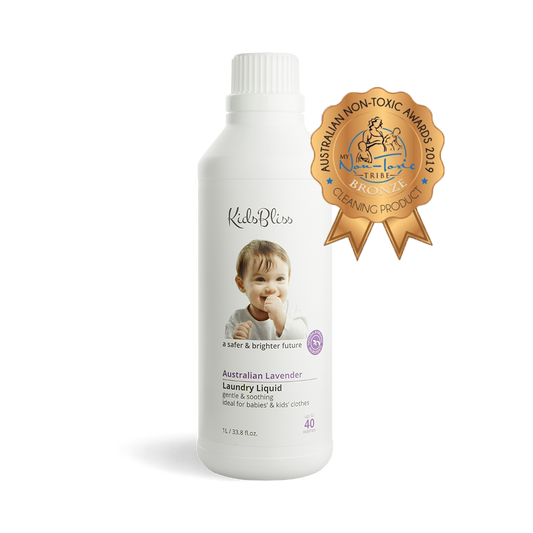
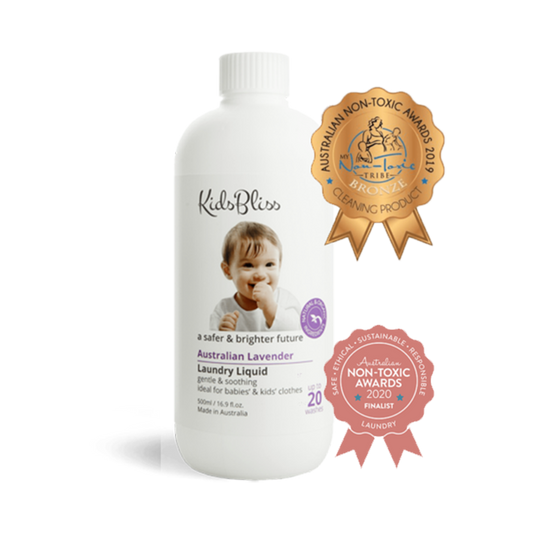
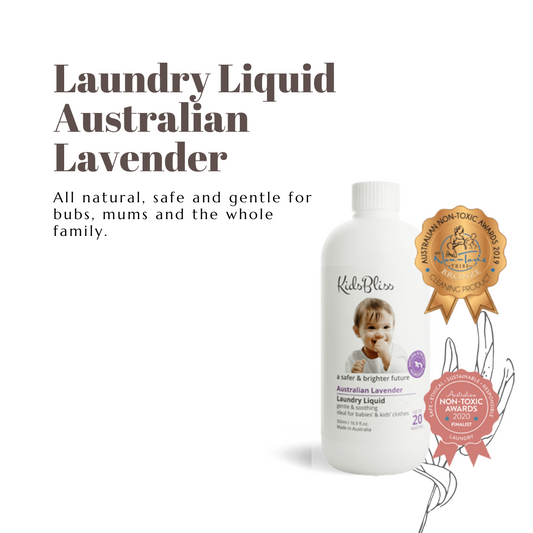
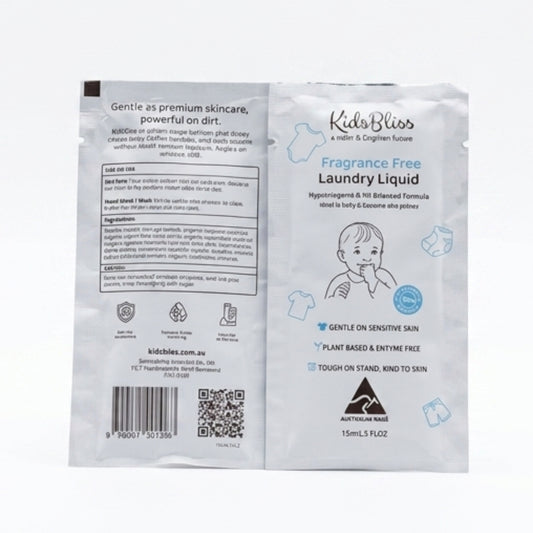
In the past, parents were forced to choose between harsh industrial cleaners and ineffective "natural" soaps. Kidsbliss has bridged this gap by formulating a laundry liquid based on Premium Surfactants—the exact same ingredients found in high-end, luxury face washes.
3.1 The Ingredient Revolution: Premium Surfactants
Most supermarket detergents rely on cheap, aggressive surfactants like Sodium Lauryl Sulfate (SLS), which strip oils from the skin. Kidsbliss swaps these for a dermatologically superior duo: Coco-Glucoside and Coco-Betaine.
3.1.1 Coco-Glucoside: The Barrier Protector
-
What it is: A non-ionic surfactant derived from renewable raw materials (coconut oil and fruit sugars).
-
Why it matters for babies: It is one of the mildest cleansing agents available. Unlike ionic surfactants that can disrupt the skin's lipid structure, Coco-Glucoside cleans effectively while keeping the delicate skin barrier intact. It lifts soil from the fabric without leaving a residue that strips the baby’s natural oils.9
3.1.2 Coco-Betaine: The Irritation Reducer
-
What it is: An amphoteric surfactant derived from coconut oil.
-
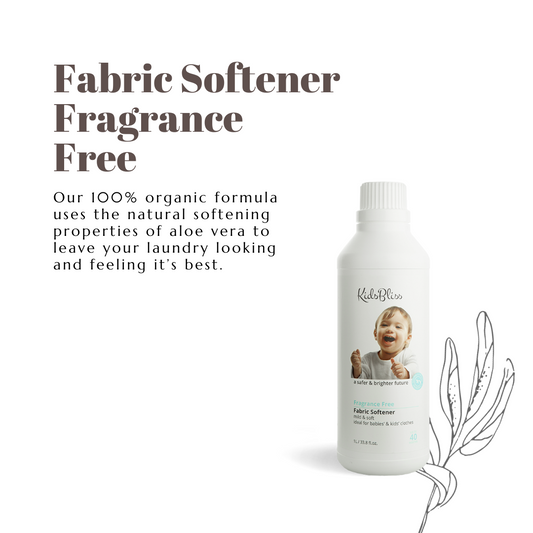
Why it matters for babies: In clinical skincare formulations, Coco-Betaine is used as a co-surfactant to reduce the irritation potential of other ingredients. It acts as a conditioning agent, leaving fabrics soft and static-free without the need for synthetic fabric softeners (which are often flammable and allergenic).10
3.2 The "Enzyme Myth": Biological vs. Non-Biological
In the Australian market, parents are often told they need "Biological" (Enzyme-based) detergents to clean stains.
-
The Risk: Biological detergents contain industrial enzymes (proteases) designed to digest protein stains. Since human skin is made of protein, residual enzymes trapped in fabric fibers can attack the skin barrier, especially when reactivated by sweat or a wet nappy.9
-
The Kidsbliss Solution: By using Coco-Glucoside and Coco-Betaine, Kidsbliss achieves a deep clean through superior solubility and emulsification rather than enzymatic digestion. This makes it a true Non-Biological detergent—the gold standard for preventing eczema and atopic dermatitis in newborns.12
Table 2: Fabric Skincare Comparison – What Goes on Baby’s Skin?
|
Component |
Standard Supermarket "Sensitive" Detergent |
Kidsbliss Eco Laundry Liquid (Fabric Skincare) |
Impact on Newborn Skin |
|
Primary Cleanser |
Sodium Lauryl Sulfate (SLS) |
Coco-Glucoside |
Coco-Glucoside preserves the skin barrier; SLS can strip it. |
|
Irritation Control |
Optical Brighteners (often irritating) |
Coco-Betaine |
Coco-Betaine reduces irritation and conditions fibers naturally. |
|
Stain Removal |
Industrial Enzymes (Protease) |
Premium Surfactant Lifting Power |
Enzymes can trigger eczema; Premium Surfactants are hypoallergenic. |
|
Softening |
Cationic Surfactants |
Natural Conditioning from Coconut Oil derivatives |
Elimination of synthetic softeners reduces chemical load. |
🫧 The "First Wash" Essential
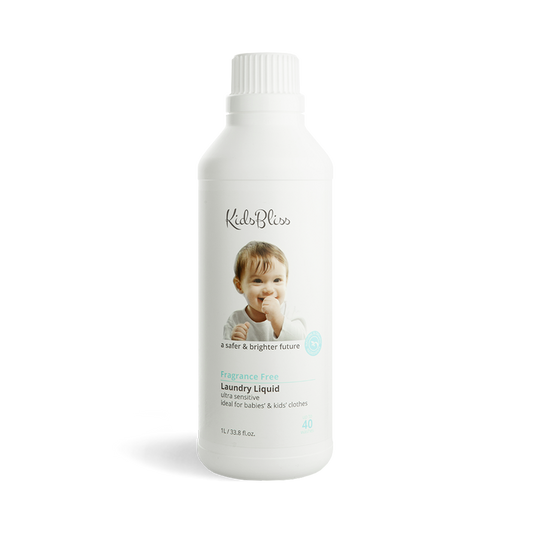
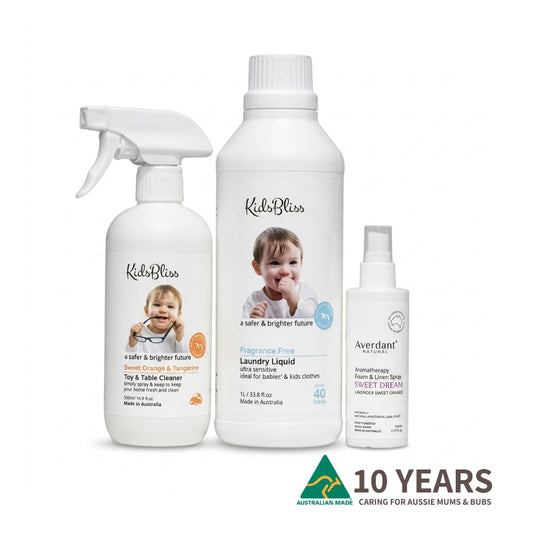
Don't risk leaving standard detergent residue on those brand-new onesies. Start your baby's Fabric Skincare routine today with our 500ml Fragrance-Free Laundry Liquid for just $10.
4. Inventory Management: Setting Up the "Sanitation Station"
Once the textiles are "detoxed" using Fabric Skincare, the nesting instinct turns to the hard surfaces. This requires a shift in mindset from "disinfection" to "sanitation strategy." We segment the home into two zones: the Safe Haven (Nursery/Mouth-Contact) and the Defense Zone (Hospital/Travel).
4.1 The Safe Haven: Toy & Table Cleaner
For the nursery, highchair, and toys, the primary goal is safety during the "oral phase." From 3 months, babies put everything in their mouths.
-
The Hero Product: Kidsbliss Toy & Table Cleaner.
-
The Chemistry: This formula relies on 100% Natural and Organic ingredients including saponified oils and citrus extracts.13
-
Why it wins: It cuts through sticky fingerprints and drool without leaving toxic residues. If a baby licks the highchair tray moments after cleaning, they are safe. It is the "edible-safe" standard for your home.
4.2 The Defense Zone: Alcohol-Free Surface Sanitiser
For the outside world—hospitals, airports, and public change rooms—you need a clinically effective shield.
-
The Hero Product: Kidsbliss Alcohol-Free Surface Sanitiser.
-
The Chemistry: This product utilizes 0.1% Benzalkonium Chloride (BZK).
-
Why BZK? Unlike the hand sanitiser which is purely natural, the Surface Sanitiser uses BZK to guarantee a 99.9% kill rate against pathogens like E. coli, Salmonella, and Staph.14
-
The "Alcohol-Free" Advantage:
-
Pram Safety: Alcohol-based sanitisers can crack and ruin the vegan leather handles of expensive prams. This formula is safe for all surfaces.
-
Skin Safety: It allows you to sanitize the change table or pram handle without the stinging or drying effect of alcohol on your hands. It is the "heavy lifter" for high-risk environments.
4.3 The Dietary Detox: Fruit & Vegetable Wash
-
Usage: Washing produce, baby bottles, and breast pump parts.
-
The Science: Standard rinsing does not remove hydrophobic pesticide residues or waxes. This wash uses Coco-Glucoside and Celtic Sea Salt to lift these contaminants, ensuring that the nutrition you pass to your baby (in utero or via milk) is free from endocrine disruptors.15
KidsBliss
The 3rd Trimester Nesting Checklist
Your guide to non-toxic nursery prep. Harness that energy safely to build a sanctuary.
1. The Biological Instinct
At 34 weeks, you might feel a sudden urge to scrub everything. That's "Nesting"—a biological surge to prep the nest. While physical energy drops, this mental drive spikes. Use it to organize, not to scrub with harsh chemicals.
2. Fabric is Skincare
Clothing is your baby's "second skin." Newborn dermis is 30% thinner than yours, absorbing residues instantly.
3. The Enzyme Myth
"Biological" detergents use enzymes that eat stains... and can eat sensitive skin proteins. We skip the enzymes for safety.
4. Premium Surfactants: Face Wash Tech for Laundry
We replaced cheap detergents with premium cleansers found in luxury skincare.
The "Gentle Giant." Non-ionic, derived from fruit sugars. Cleans without stripping the skin barrier.
The "Soother." From coconut oil, it reduces irritation and creates that luxurious, soft foam.
5. The "First Wash" Protocol
New clothes are coated in formaldehyde and sizing agents. Never dress a newborn in unwashed items.
- ✅ Step 1: Sort by color.
- ✅ Step 2: Wash with KidsBliss (removes manufacturing glues).
- ✅ Step 3: Dry in sunlight if possible (natural bacteria killer).
6. The Sanitation Station
Natural Toy & Table
Babies mouth everything. Use our 100% natural cleaner. No bleach, just safe power.
Natural Hand Sanitiser
Alcohol-free & plant-based. Kills germs without stripping mom's hands or stinging baby.
Fruit & Veg Wash
Remove pesticides and waxes. Clean eating starts with clean produce.
5. The Ultimate 3rd Trimester Nesting Checklist: A Week-by-Week Plan
This checklist integrates the "Fabric Skincare" philosophy and "Sanitation Station" into a structured timeline.
Week 28-30: The Edit & The Air
Goal: Clear the space and improve air quality.
-
[ ] The Great Declutter: Remove items you haven't used in 6 months to reduce dust reservoirs.17
-
[ ] Ventilation Strategy: Open windows daily. This is the single most effective way to lower indoor VOC levels.18
-
[ ] The "Off-Gassing" Protocol: Unbox new furniture (cot, dresser) immediately. Let it sit in a well-ventilated room for at least 2 weeks to allow formaldehyde from glues to dissipate.18
Week 31-33: The Fabric Skincare Phase
Goal: Execute the "First Wash" Protocol.
-
[ ] Detergent Switch: Purchase Kidsbliss Eco Laundry Liquid.
-
[ ] The Face Wash Test: Remind yourself: "If I wouldn't wash my face with it, I won't wash the baby's clothes with it." relying on the gentle power of Coco-Glucoside and Coco-Betaine.
-
[ ] Batch Washing: Wash all clothes, sheets, and swaddles at 40°C.
-
[ ] Soft Toy Detox: Wash soft toys in a mesh bag to remove manufacturing dust.
Week 34-36: The Sanitation Station Setup
Goal: Deep clean surfaces without toxins.
-
[ ] The Nursery Clean: Wipe down the cot rails and teething bars with Toy & Table Cleaner (the natural choice for mouth-contact surfaces).
-
[ ] The Pram Prep: Use the Alcohol-Free Surface Sanitiser to wipe down the pram wheels and handle. It kills the germs from the shop floor without damaging the leatherette finish.
-
[ ] Car Seat: Vacuum and wipe down the hard shell of the car seat.
🧸 Build Your Sanitation Station
If you only get one thing for your nursery station, make it the Natural Toy & Table Cleaner. It uses 100% natural ingredients so you never have to worry about toxic bleach residues near your baby's mouth.
Week 37-38: The "Hospital Ready" Pack
Goal: Final logistics for the birth and visitors.
-
[ ] The Hospital Guard: Pack the Kidsbliss Surface Sanitiser (60ml) in your hospital bag. Use it to sanitize the hospital tray table, bed rails, and door handles—high-touch areas where germs linger.14
-
[ ] The Gentle Visitor Gatekeeper: Pack KidsBliss Foaming Hand Sanitiser. It is 100% natural (Lactic Acid/Citrus based) and alcohol-free.
-
Why: Visitors and siblings will want to hold the baby. Standard alcohol sanitisers are harsh on toddler skin and dangerous if licked. This foam is safe, fun for siblings to use, and effectively cleans hands before they touch the newborn.
-
[ ] Bottle Station: Wash bottles and pump parts with Fruit & Vegetable Wash to remove factory residues from silicone teats without leaving a soapy taste.19
Week 39-40: The Safety & Sleep Audit
Goal: Red Nose Guidelines compliance.
-
[ ] The Cot Audit: Ensure the cot is empty. Remove pillows, bumpers, and loose blankets.20
-
[ ] Anchor Furniture: Secure heavy furniture to the wall to prevent tipping.20
-
[ ] Rest: You have prepared the nest. Now, prepare yourself.
Conclusion: From Chore to Ritual
The journey through the third trimester is physically demanding, but the nesting instinct offers a unique reservoir of energy. By reframing this period not as a series of chores but as a ritual of preparation, expectant mothers can find deep satisfaction and reduced anxiety.
The shift to Fabric Skincare—utilizing premium Coco-Glucoside and Coco-Betaine—ensures your baby is wrapped in purity from day one. By deploying your Sanitation Station strategically, using the Toy & Table Cleaner for safety and the Hand Sanitiser for visitors, you create a home that is both non-toxic and secure.
You are not just cleaning a house; you are building a nest. Trust your instinct, follow the checklist, and rest in the knowledge that you have prepared the safest possible start for your new arrival.
🤰 Overwhelmed by the Checklist?
We know 3rd-trimester fatigue is real. Skip the piecemeal shopping and get everything you need for a non-toxic home in one click. Our Ultimate Nesting Bundle includes your complete Fabric Skincare and Sanitation setup.